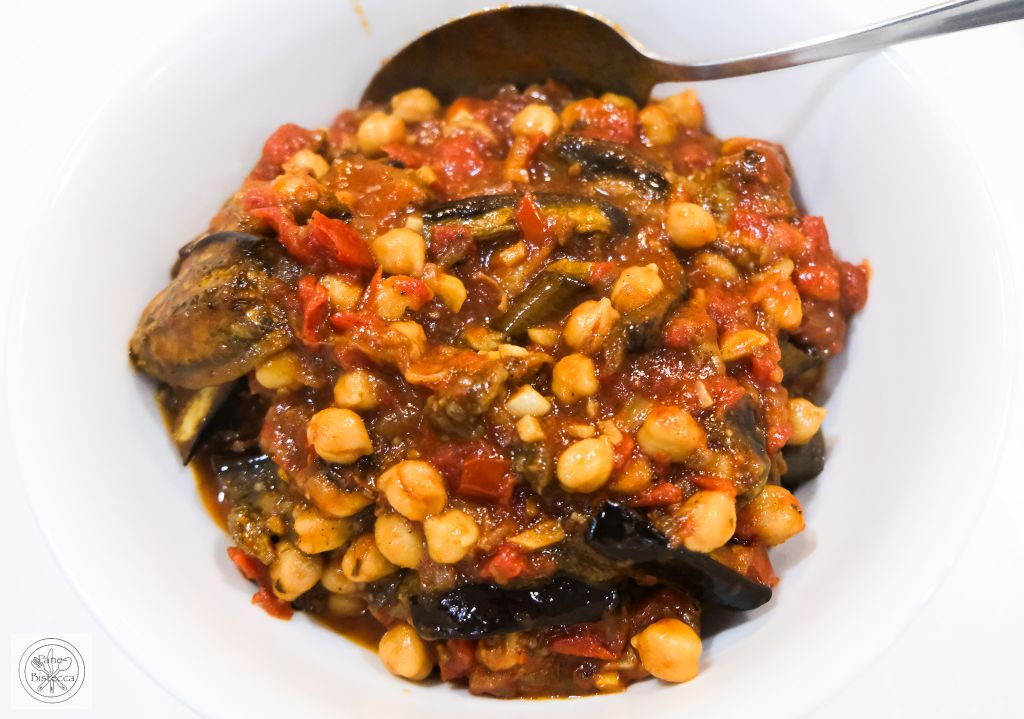
Maghmour – Lebanese Moussaka
Pane-Bistecca
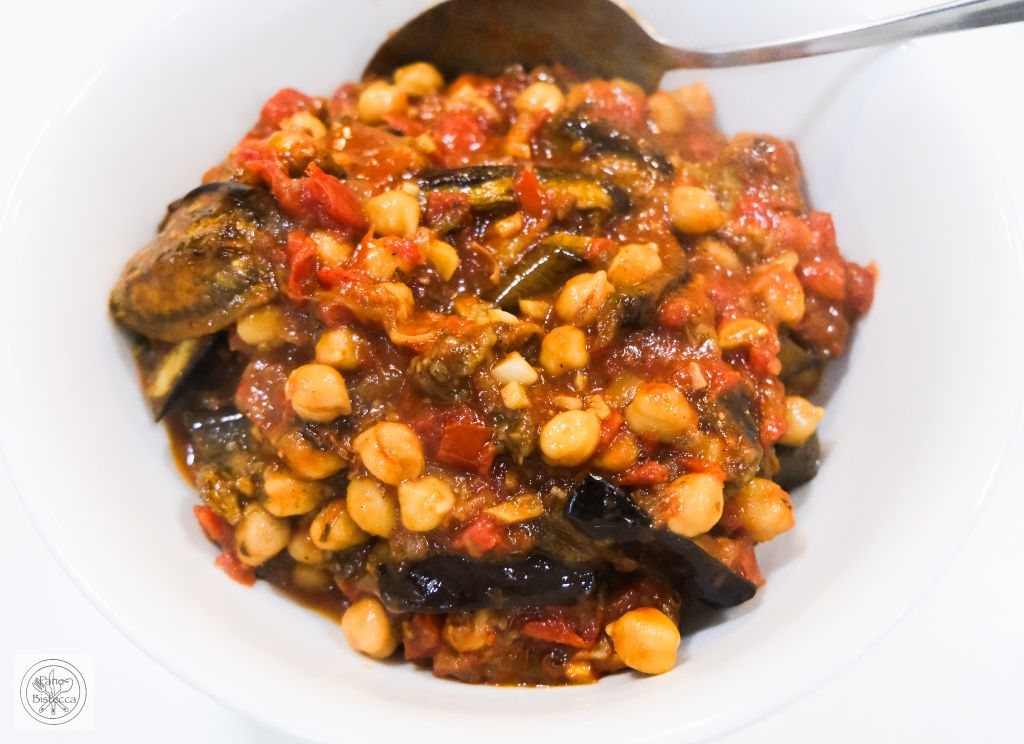
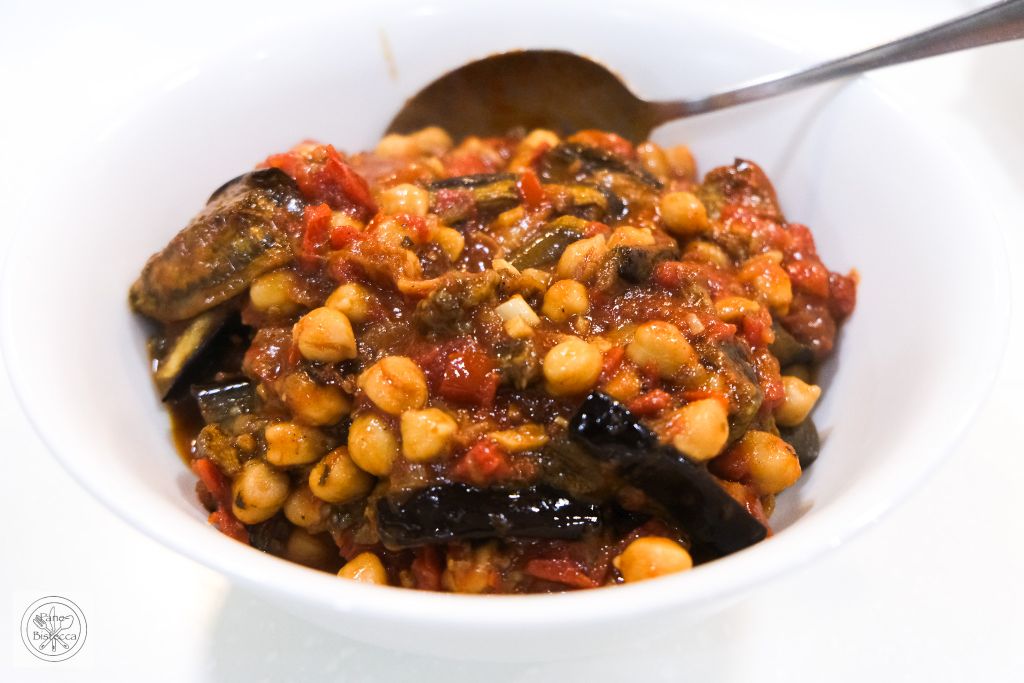
People call Maghmour “Lebanese moussaka,” but why? I don’t think it has anything in common with moussaka. Sure, it has tomato sauce too, but that’s where the similarities end.
Moussaka is a dish that is popular throughout the Middle East, the eastern Mediterranean, and the Balkans. Most versions are made with eggplant, while some use potatoes, tomato sauce, and sometimes meat.
The word “moussaka” itself is derived from the Arabic “musaqqa’a,” which suggests a likely Levantine origin.
In the birthplace of agriculture and many culinary delights, moussaka is a meze dish made from these very ingredients, plus chickpeas. It can be eaten warm, but is usually enjoyed at room temperature along with several other small dishes. It is also known by other names, such as maghmour or moussaka batinjan.
In their original form, the eggplants were fried in plenty of local olive oil. This is what makes the eggplants so tender and juicy, and it’s a common cooking method in Middle Eastern eggplant recipes. If the olive oil is of good quality, the flavor is hard to beat.
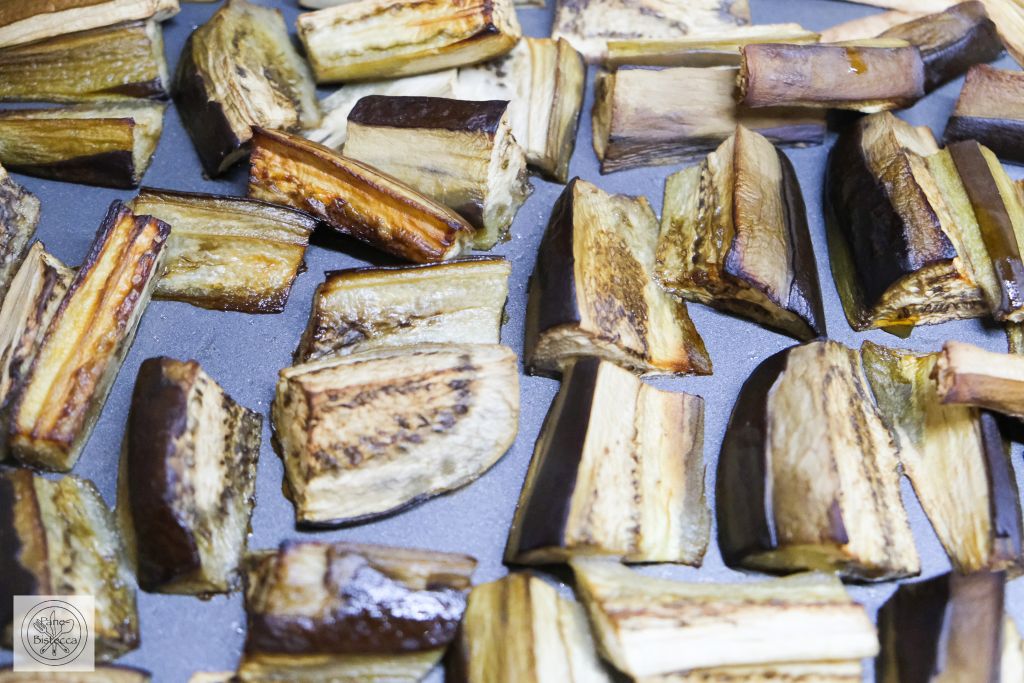
These days, however, many people choose to roast the eggplants instead. I wouldn’t say they’re quite as delicious, but they come so close that I decided to go with this method.
This Recipe takes part in the Culinary World Tour of Volkermampft, who is traveling to Lebanon this month.
Moussaka is a dish that is popular throughout the Middle East, the eastern Mediterranean, and the Balkans. Most versions are made with eggplant, while some use potatoes, tomato sauce, and sometimes meat.
The word “moussaka” itself is derived from the Arabic “musaqqa’a,” which suggests a likely Levantine origin.
In the birthplace of agriculture and many culinary delights, moussaka is a meze dish made from these very ingredients, plus chickpeas. It can be eaten warm, but is usually enjoyed at room temperature along with several other small dishes. It is also known by other names, such as maghmour or moussaka batinjan.
In their original form, the eggplants were fried in plenty of local olive oil. This is what makes the eggplants so tender and juicy, and it’s a common cooking method in Middle Eastern eggplant recipes. If the olive oil is of good quality, the flavor is hard to beat.
These days, however, many people choose to roast the eggplants instead. I wouldn’t say they’re quite as delicious, but they come so close that I decided to go with this method.
This Recipe takes part in the Culinary World Tour of Volkermampft, who is traveling to Lebanon this month.
Ingredients
2-3 large Eggplants
1 Onion, chopped
4 Garlic cloves, chopped
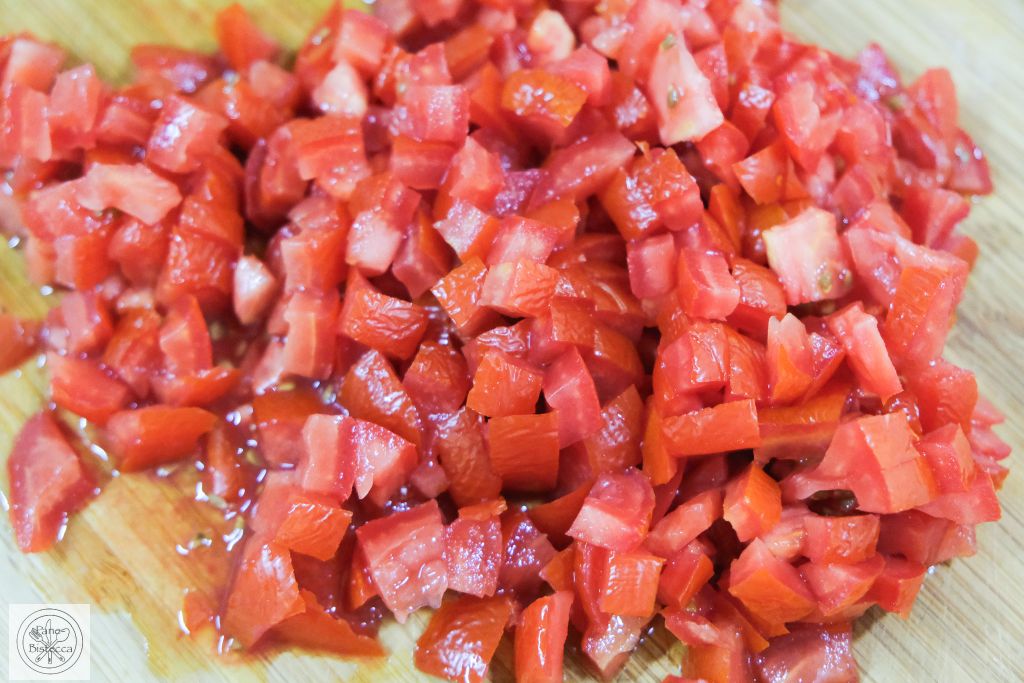
4 Tomatoes, chopped
2 tbsp Tomato Pureek
100 ml Water
1 can Chickpeas
½ tsp Cinnamon
1 tsp Allspice
Salt and Pepper
Chili
Olive Oil
2 tbsp dried Mint Leaves crumbled
Instructions
1
Step 1
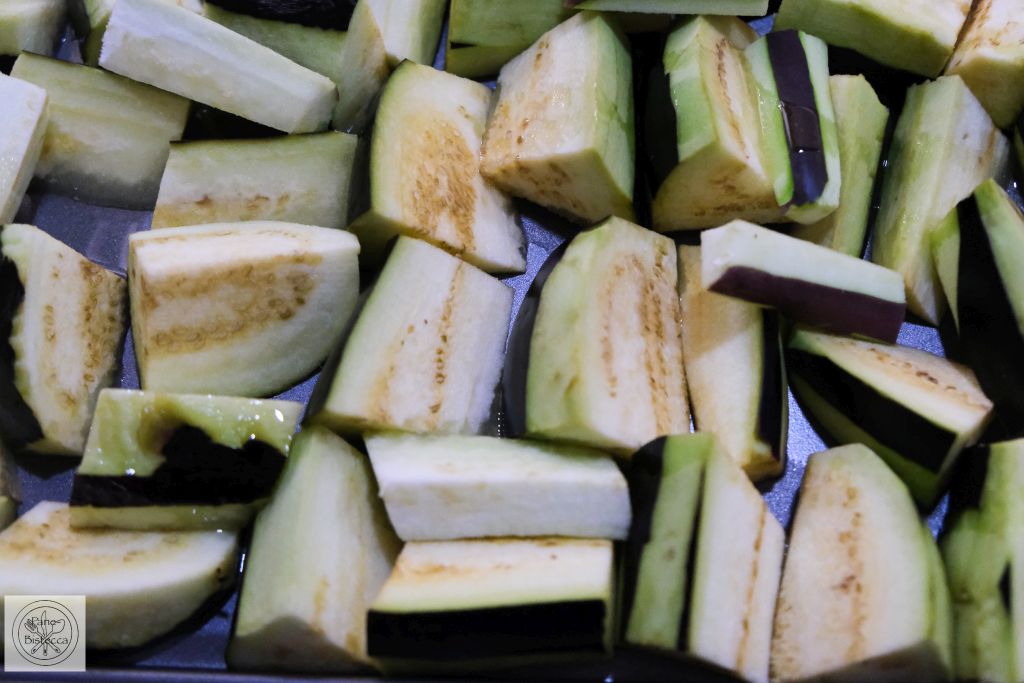
Wash the eggplants and peel the skin in strips. I leave some of the skin on so the pieces don’t fall apart completely while cooking. Then cut them into small sticks!
2
Step 2
Place the penne on a baking sheet, drizzle with olive oil, and roast in the oven at 180 C for 30 minutes. Set aside.
3
Step 3
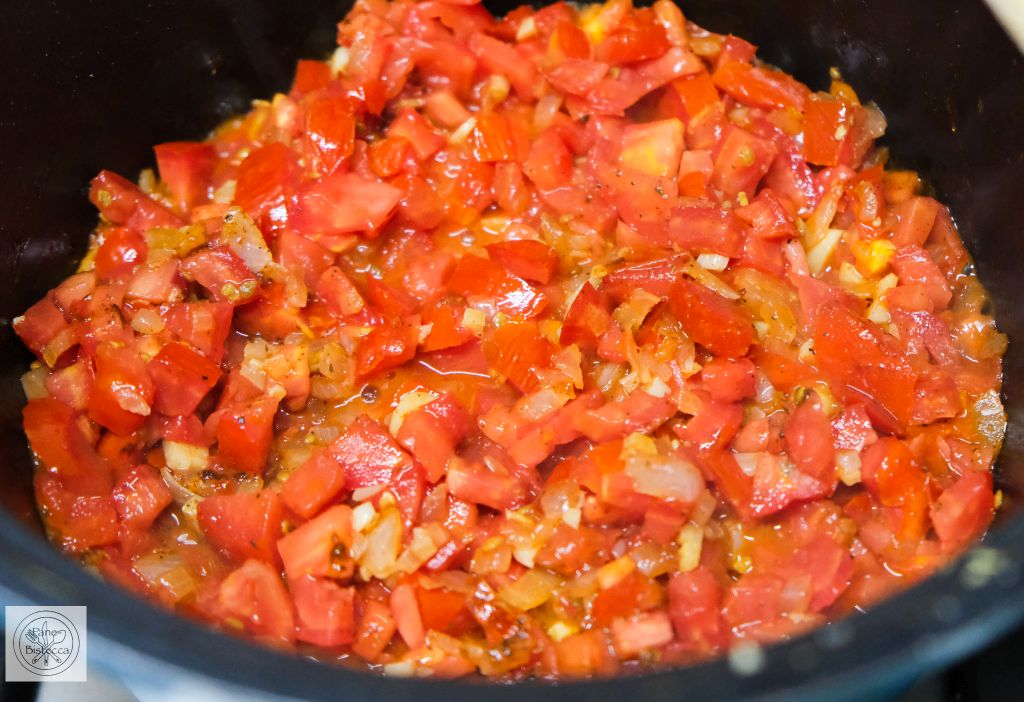
Sauté the onion and garlic cloves in a little olive oil, then add the tomatoes and season well. Let it simmer for 15 minutes.
4
Step 4
Pour in the lemon juice and add the drained and rinsed chickpeas.
5
Step 5
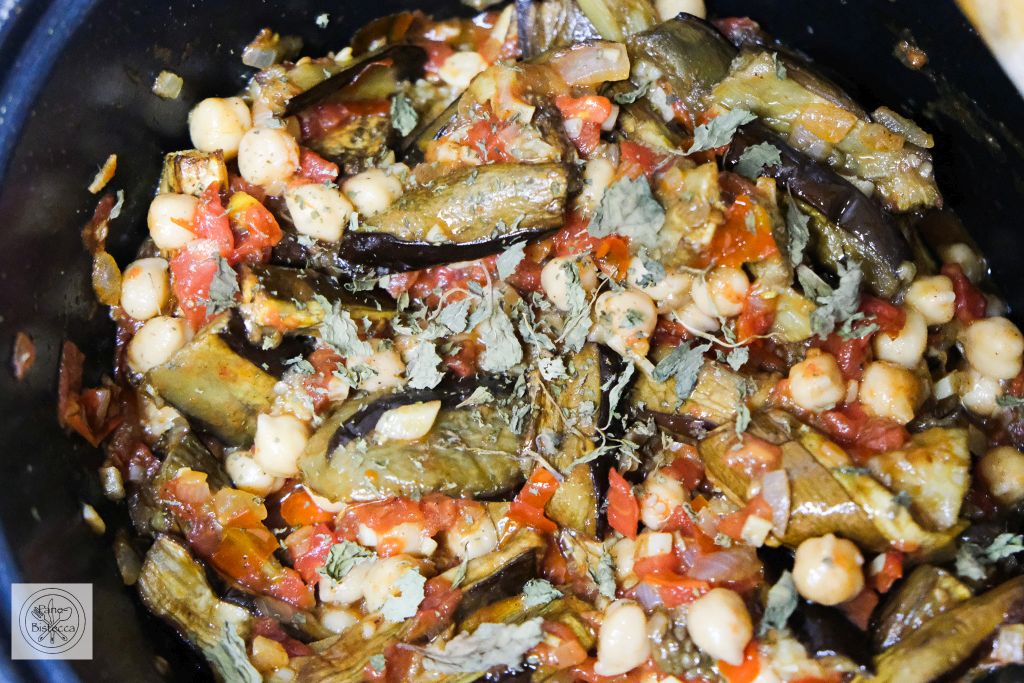
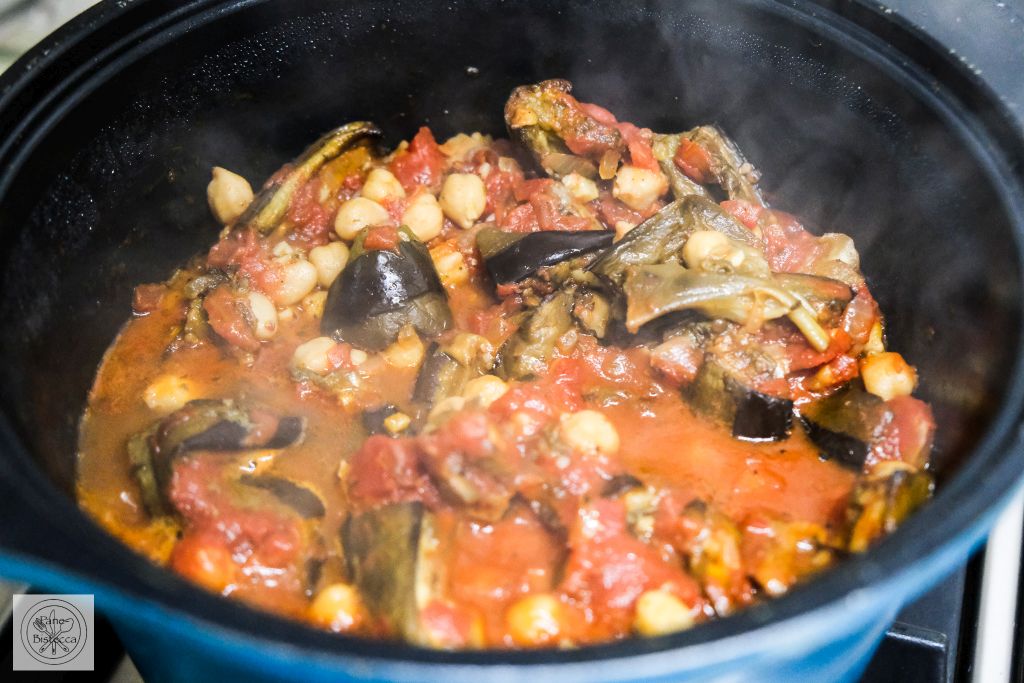
Stir in the roasted eggplant and let it simmer for another 15 minutes.

- Susanne von magentratzerl mit Shorba Hamrahn und Lahm bi jjeen – Libanesische Pizza
- Friederike von Fliederbaum mit Warak Enab – gefüllte Weinblätter und Kibbeh Arnabieh, einfach und vegan
- Wilma von Pane-Bistecca mit Maghmour – Libanesisches Moussaka und Malfouf Mahshi – Libanesische Kohlrouladen und Shish Barak – Dumplings aus Libanon und Libanesischer Curcuma Reis im TM6 und Libanesisches Zitronen Huehnchen auf Joghurt
- Regina von bistroglobal mit Makloubeh
- Petra aka Cascabel von Chili und Ciabatta mit Libanesische Hähnchenflügel mit Koriander-Pistazien-Pesto und Batata Harra
- Tina von Küchenmomente mit Sfouf – Libanesischer Grießkuchen
- Britta von Brittas Kochbuch mit Fattoush – Brotsalat (فتوش)aus dem Libanon und Mezzeteller aus dem Libanon und Mudardara – مجدرة – Libanesisches Linsen-Reisgericht und Sfiha – صفيحة – Gefülltes Fladenbrot (Libanon)



![[Valid RSS]](https://pane-bistecca.com/wp-content/uploads/2024/05/valid-rss-rogers.png "Validate my RSS feed")
Das ist sehr köstlich aus, auch wenn der Name nicht ganz passen mag ;-).
Köstlich wars, aber ich würde es nie ein Moussaka nennen.
LG Wilma
Liebe Wilma, mit Tomaten und Auberginen kannst du mich immer locken. Lecker. Viele Grüße, Regina
Mich auch!!!!
LG Wilma
Auch wenn der Name ein anderes Gericht vermuten lässt: Zutaten und das Ergebnis gefallen mir gut 🙂
Danke, ja es schmeckt sehr gut!
LG Wilma
Oh, das sieht aber lecker aus und klingt ganz nach meinem Geschmack. So ganz langsam bekomme ich meinen Mann dazu, Auberginen zu essen. Er liebt allerdings Kichererbsen… mal schauen, ob ich das libanesische Moussaka mal auf den Speiseplan setzen kann. Vielleicht, indem ich noch ein paar Zucchini als Auberginenersatz reinschmuggele. 😉
Liebe Grüße
Britta
Zucchini ist eine gute Idee! Schmeckt wirklich super, vielleicht mag er’s dann.
LG Wilma