
Birchermüesli – Breakfast from Switzerland
Pane-bistecca
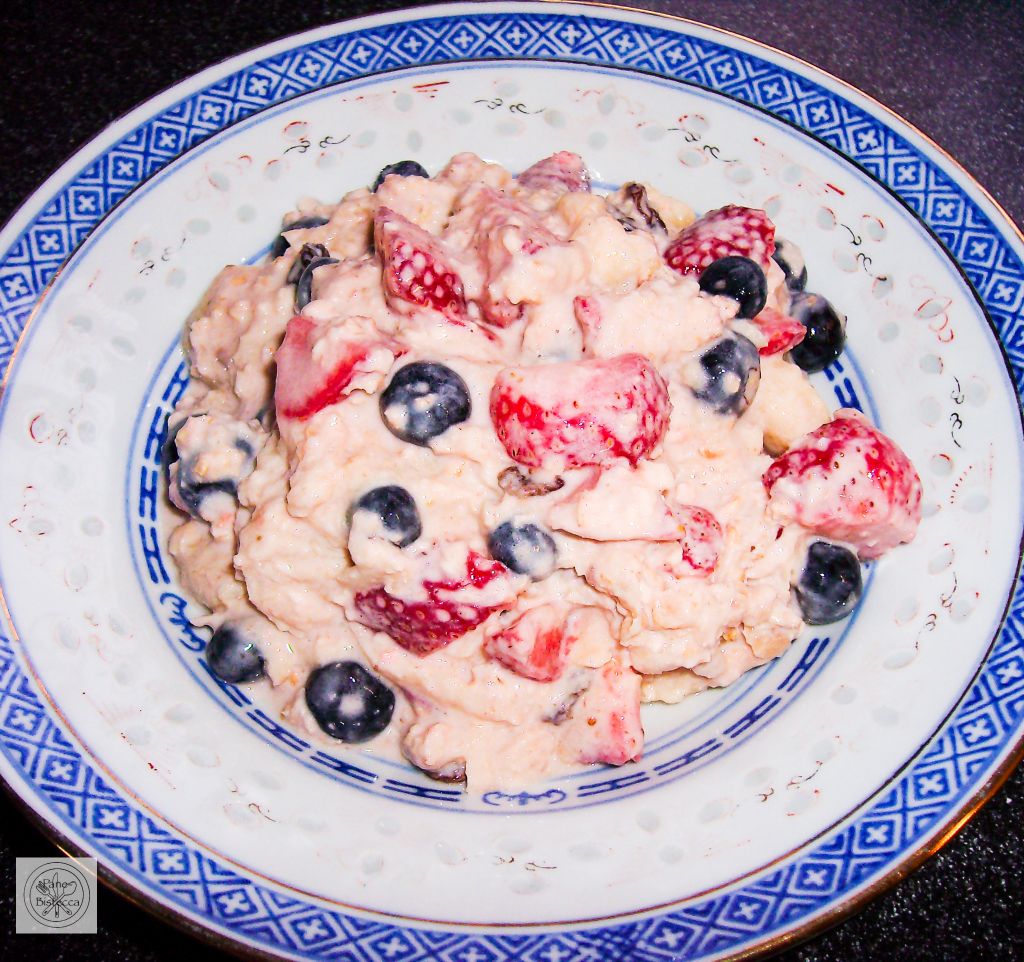
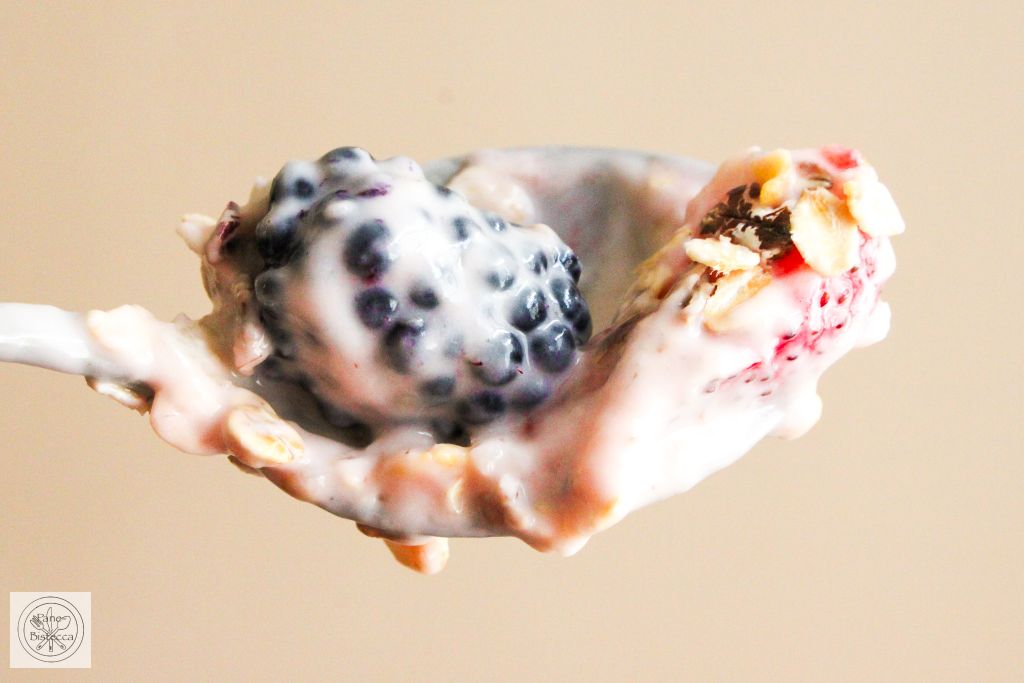
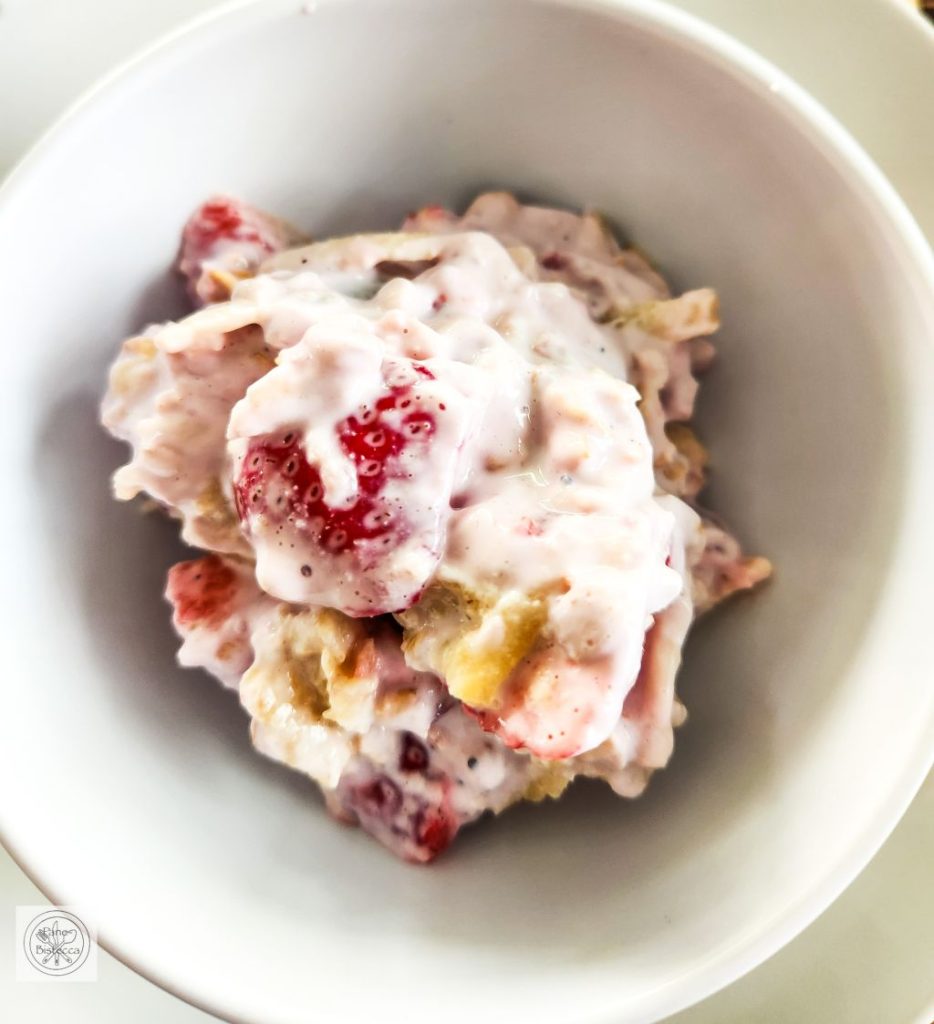
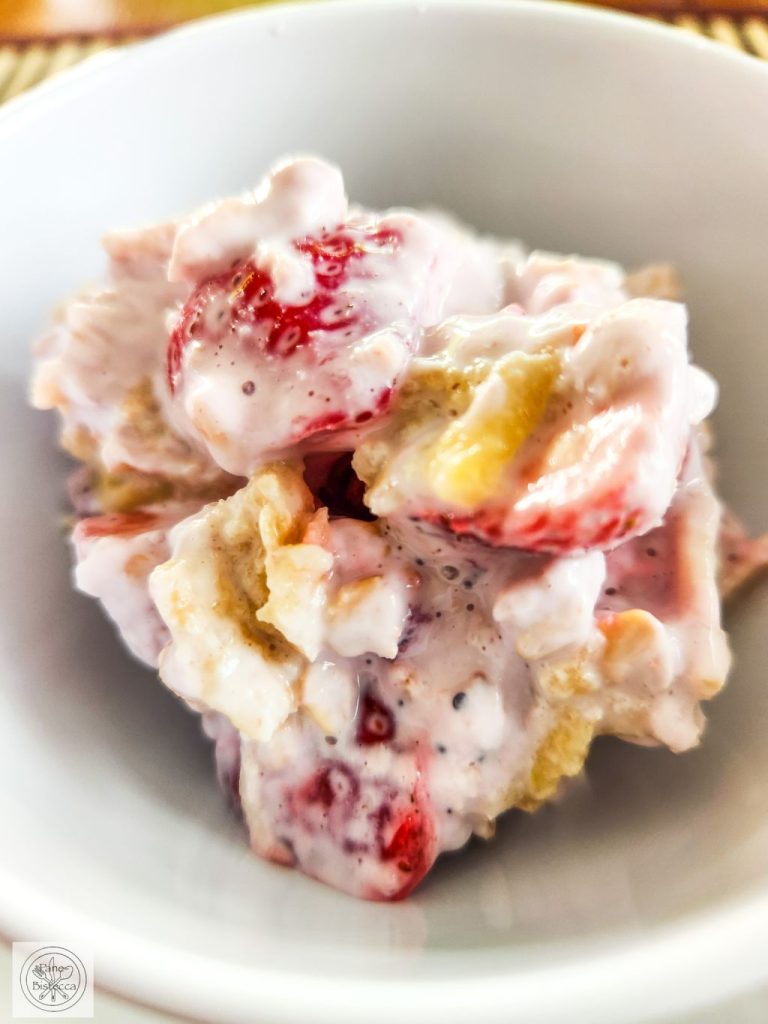
Birchermüesli – breakfast from Switzerland, a classic muesli with delicious fruits and berries; here in Switzerland, it is not only served for breakfast.
The original Birchermuesli was developed before 1900 by Maximilian Oskar Bircher-Benner, a doctor and nutrition reformer from Aargau. In 1897, during a study visit to Dresden, he presented his raw apple dish to Heinrich Lahmann, a doctor of medicine, who, convinced of its benefits, introduced this muesli into the kitchen of the Lahmann Sanatorium. Bircher-Benner, in turn, took many more ideas back with him to Switzerland.
The founder of the “Lebendige Kraft” sanatorium on the Zürichberg eventually named his creation Apfeldiätspeise, or simply d Spys (Swiss German for “the dish”). From 1902 onwards, he tried to introduce the guests at his Zurich sanatorium to a wholefood diet with fresh fruit in this way – and he succeeded. Birchermus was served as a light, easily digestible evening meal.
Bircher-Benner is considered a pioneer of wholefood nutrition. He was originally convinced that unprocessed raw plant-based foods, such as those used in muesli, contained “biologically active light quanta” from which the body could derive “vitality” – a hypothesis that later proved to be false. As an advocate of a vegetarian raw food diet, Bircher-Benner considered freshly grated apples with their peel and core to be the most important ingredient, rather than cereal flakes. He used condensed milk because fresh milk, which was unpasteurized at the time, posed a high risk of tuberculosis. In the meantime, the manufacturing process for oat flakes has also improved. The fine flakes available today only need to be soaked briefly. (from Wikipedia)
This recipe, which can also be served as a light meal for lunch or dinner, takes part in the culinary World travel of Volkermampft, who is collecting breakfasts from around the world this September. For my Bircher muesli, I’m traveling to Switzerland.
The original Birchermuesli was developed before 1900 by Maximilian Oskar Bircher-Benner, a doctor and nutrition reformer from Aargau. In 1897, during a study visit to Dresden, he presented his raw apple dish to Heinrich Lahmann, a doctor of medicine, who, convinced of its benefits, introduced this muesli into the kitchen of the Lahmann Sanatorium. Bircher-Benner, in turn, took many more ideas back with him to Switzerland.
The founder of the “Lebendige Kraft” sanatorium on the Zürichberg eventually named his creation Apfeldiätspeise, or simply d Spys (Swiss German for “the dish”). From 1902 onwards, he tried to introduce the guests at his Zurich sanatorium to a wholefood diet with fresh fruit in this way – and he succeeded. Birchermus was served as a light, easily digestible evening meal.
Bircher-Benner is considered a pioneer of wholefood nutrition. He was originally convinced that unprocessed raw plant-based foods, such as those used in muesli, contained “biologically active light quanta” from which the body could derive “vitality” – a hypothesis that later proved to be false. As an advocate of a vegetarian raw food diet, Bircher-Benner considered freshly grated apples with their peel and core to be the most important ingredient, rather than cereal flakes. He used condensed milk because fresh milk, which was unpasteurized at the time, posed a high risk of tuberculosis. In the meantime, the manufacturing process for oat flakes has also improved. The fine flakes available today only need to be soaked briefly. (from Wikipedia)
This recipe, which can also be served as a light meal for lunch or dinner, takes part in the culinary World travel of Volkermampft, who is collecting breakfasts from around the world this September. For my Bircher muesli, I’m traveling to Switzerland.
Ingredients
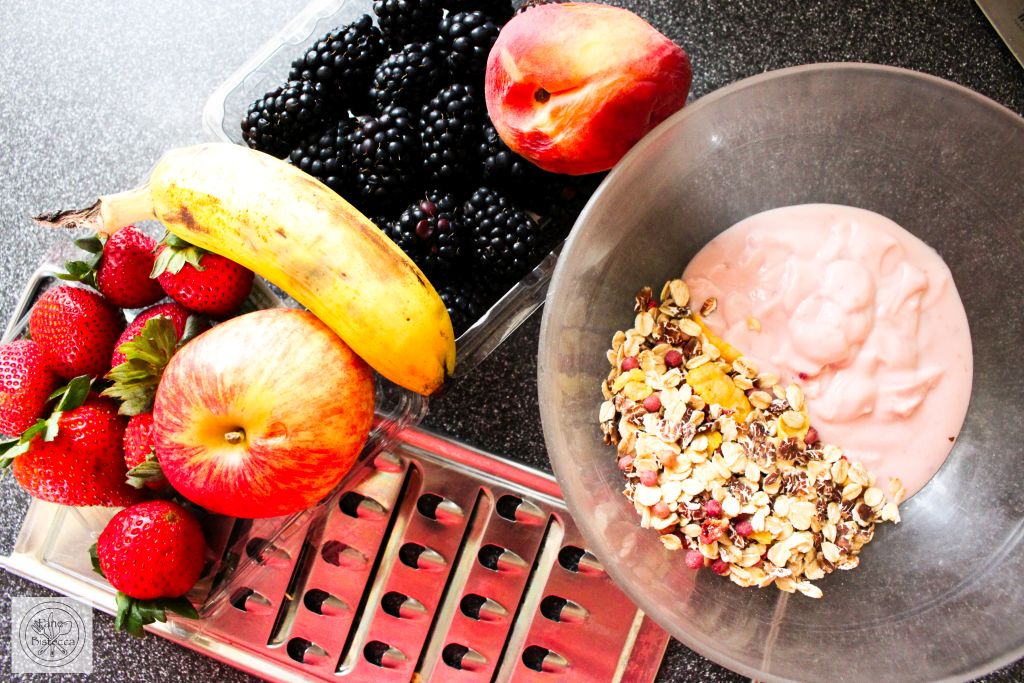
200 g Fruit yogurt or Nature Skyr, or a Mix of them
Apple, grated
Banana
Strawberries
Blueberries
Blackberries
Apricots
Peach
5-6 tbsp Musli Mix
or traditional Oats Mx with Nuts with as little Sugar as possible!
50-80 ml Milk
Juice of 1 Lemon
Instructions
1
Step 1
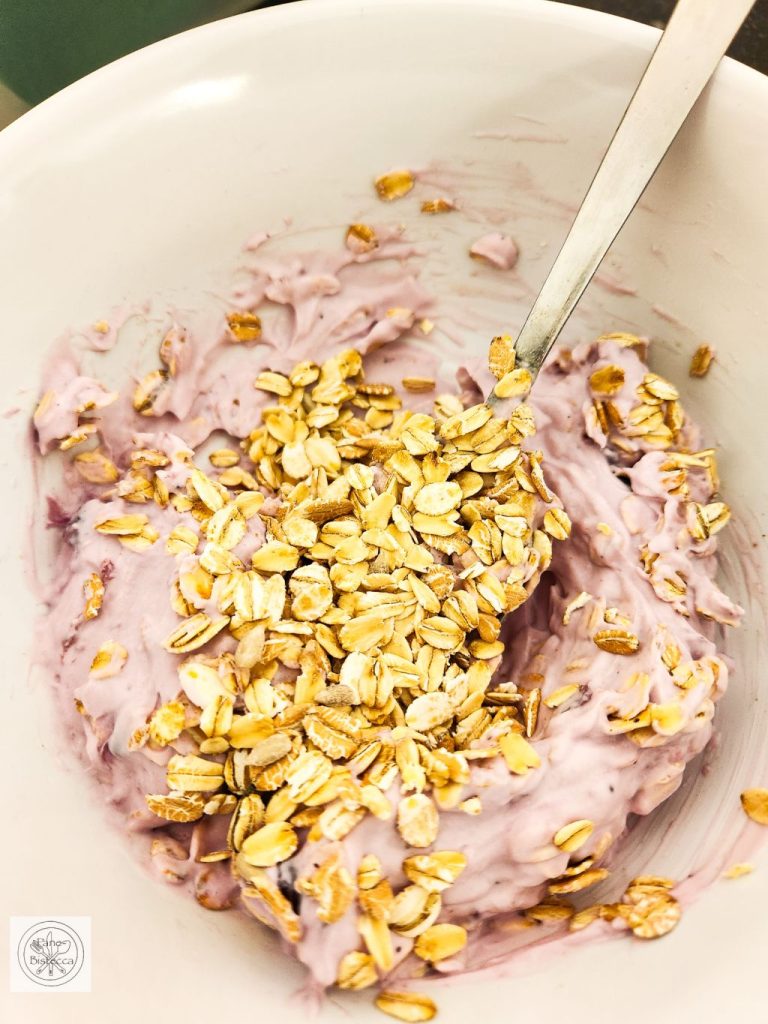
Mix the yogurt with the flakes. If you use ready-made mixes, you don’t need to soak them, or only very briefly. If you use oat flakes, you can soak them overnight to make them creamy.
2
Step 2
Add a little milk to make the mixture a little more liquid, as the soaked oat flakes absorb a lot.
3
Step 3
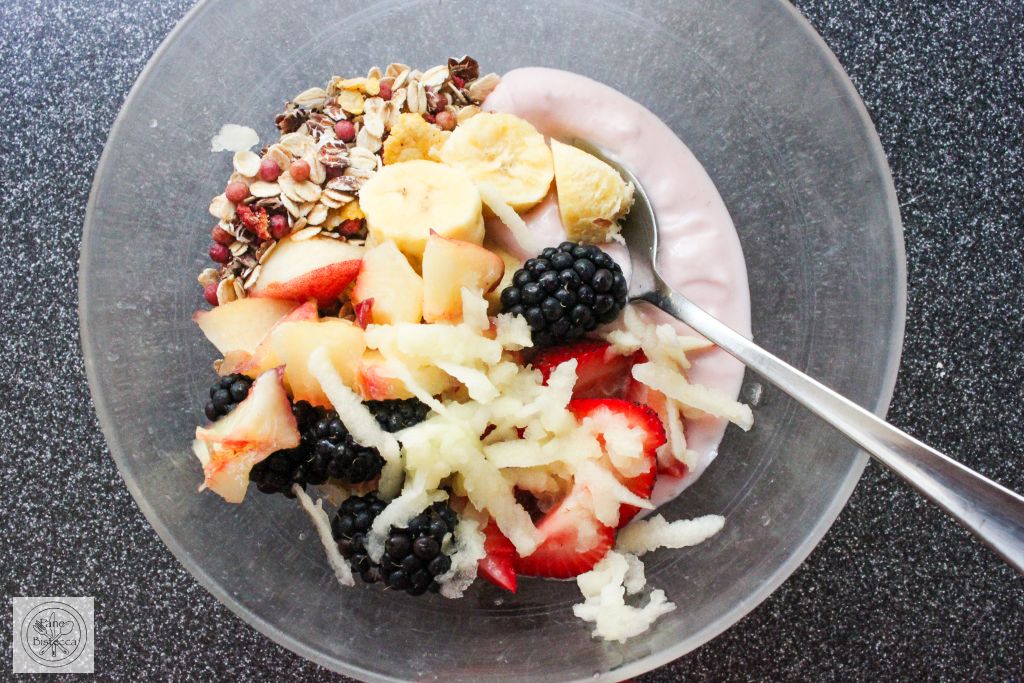
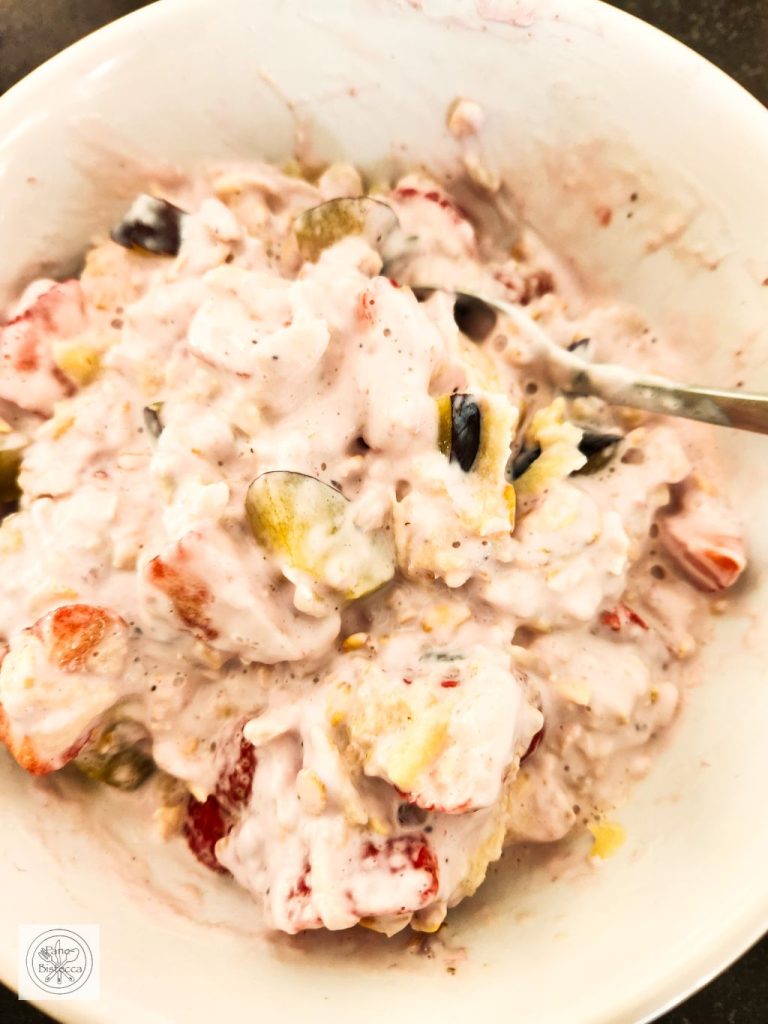
Coarsely grate the apple, chop the banana and berries if necessary. Mix everything together.
4
Step 4
Add the lemon juice and let it steep briefly.
Notes
Birchermüesli can be served at any time of day. It is a particularly popular evening meal in summer. Breakfast Ideas.
- Simone von zimtkringel mit Petit Pains au Chocolat
- Wilma von Pane-Bistecca mit Birchermuesli und Roggen-Vollkorn Brot mit Joghurt
- Petra aka Cascabel von Chili und Ciabatta mit Semiya Upma – Vermicelli Upma
- Susanne von magentratzerl mit Ontbijtkoek
- Sylvia von Brotwein mit Cilbir – Rezept für türkische Eier mit Joghurt
- Jenny von Jenny is baking mit Huevos pericos – kolumbianisches Rührei
- Cornelia von SilverTravellers mit Moltebeerenmarmelade ohne Kerne – das Gold aus dem Moor
- Kathrina von Küchentraum & Purzelbaum mit Brioche Rezept – Einfaches süßes Hefebrot
- Britta von Brittas Kochbuch mit Strammer Max
- Friederike von Fliederbaum mit Frühstücksgugelhupf
- Susanne von magentratzerl mit Haags Ontbijt
- Regina von bistroglobal mit Nasi Lemak


![[Valid RSS]](https://pane-bistecca.com/wp-content/uploads/2024/05/valid-rss-rogers.png "Validate my RSS feed")
Ich erinnere mich tatsächlich an mein erstes Bircher-Muesli in einem Vollwert-Kochkurs in den 80er Jahren, da kam sogar noch Sahne rein. Bei dir gefallen mir die schönen Früchte darin! Brombeeren habe ich gerade wieder 300 g geerntet 🙂
Super, die Beeren machen es aus! Ohne schmeckt es mir nicht besonders.
LG Wilma
Mir war nicht bewusst, dass Bircher Müsli auch zum Abend gegessen wird, ich liebs, besonders, wenn es im Hotel angeboten wird, da greife ich dann immer zu.
Bei uns gabs das immer im Sommer am Abend, da es leicht verdaulich ist und man nicht kochen muss.
LG Wilma
Bircher Müsli zum Abendessen – das war mir tatsächlich ganz unbekannt. Zum Frühstück kenne ich das natürlich und habe ich auch schon einige Male gegessen. Lecker und sättigend.
In der Schweiz war das üblich und ist es auch immer noch.
LG Wilma
Liebe Wilma, Müesli esse ich hin und wieder mal, aber dann auch eher als Zwischenmahlzeit.
Ich warte ja immer noch darauf, dass mal jemand ein herzhaftes Müesli erfindet. Gerne mit Tomatenstücken, Gurke oder Möhre und dann schön pikant abgeschmeckt. Das wäre dann eher so meins!
Liebe Grüße
Britta
Muesli in deftiger Form wäre dann eher ein Salat? Oder willst du Haferflocken drin? Dann wäre es Congie… jetzt bin ich verwirrt!
LG Wilma
*lol*
Es war nicht meine Absicht, Dich zu verwirren. Da ich nicht gerne süß frühstücke und somit auch alles Richtung Porridge, overnight oats und wie das alles heißt, ausfällt, würde ich dennoch bei einem Müesli mit Haferflocken und Nüssen, aber mit Gemüse statt Obst und dann herzhaft gewürzt mit Salz, Pfeffer, etwas Paprikapulver durchaus zugreifen.
Liebe Grüße
Das werden wir wohl einmal ausprobieren muessen!
LG Wilma
Vielen Dank für die Erklärung zur Herkunft des Bircher Müslis. Das wusste ich bisher noch nicht. Mit Beeren ist das natürlich auch nochmal doppelt lecker.
Beeren gehören dringend dazu!
LG Wilma
Interessant finde ich die Geschichte des Müslis, ich glaube es gehört irgendwie zur Schweizer Identität…
Mich kannst du ehrlicherweise mit der Kombination von Haferflocken und Joghurt jagen, aber Haferflocken ganz kurz in Wasser aufgekocht und mit viel Obst kann ich essen (wenn die Flocken nicht zuu weich sind)…
lg
So hat jeder einen anderen Geschmack, Gott sei Dank ist das so!
LG Wilma
Liebe Wilma, wenn dein Müsli keine “Lebenskraft” gibt, weiß ich auch nicht weiter. Viele Grüße, Regina
🙂 genau!
LG Wilma
Das gefällt mir gut mit dem vielen Obst darin. Mein erstes Zusammentreffen mit dieser Art von Frühstück, war tatsächlich nicht Müsli aus Flocken, sondern Frischkornbrei aus frisch geschrotetem Getreide – das könnte ich auch mal wieder machen; heute gibt es eher neumodische Obernight Oats.
Frisch geschrotetes Getreide… du machst mich neugierig!
LG Wilma