Sai Oua – Sausage from Laos
Pane-Bistecca
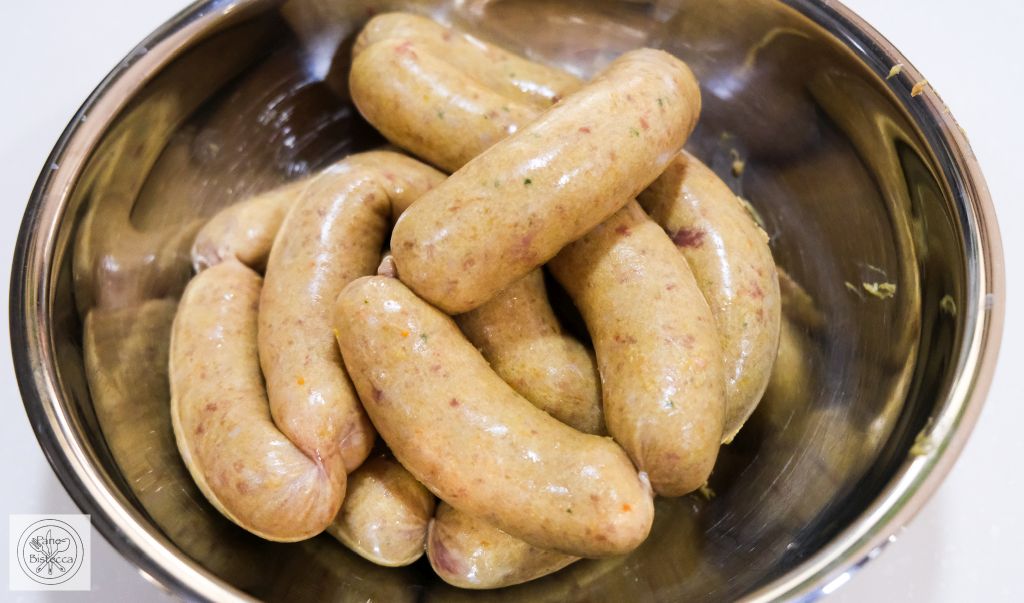
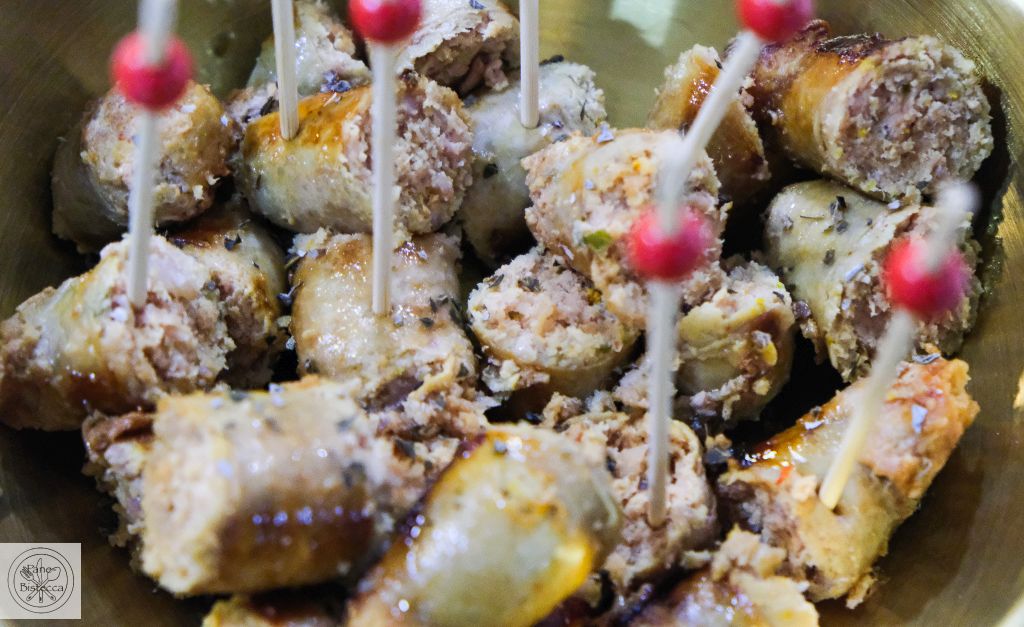
Sai Oua – sausage from Laos is completely different from the sausages we know in Europe. Here, a kind of curry sauce is mixed in, giving the sausage a very spicy flavor.
Sai oua, also spelled Sai Ua, is a popular sausage from Luang Prabang, Laos, and northern Thailand, especially Chiang Mai. Sai oua is an old Laotian word for sausage. The name is an old compound term in Laotian and literally means “stuffed intestine”: sai (ໄສ້) from ‘intestine’ and oua (ອົວ/ອັ່ວ) means “stuffed.” It is a staple food in Laos.
It used to be prepared at home, but today it is widely available in markets and shops, making it accessible to locals and tourists alike. The bold combination of herbs, spices, and pork makes sai oua a fragrant, spicy, and savory sausage that is symbolic of the cuisine of North-Southeast Asia.
The spicy sausage originated in Luang Prabang, Laos. Luang Prabang was once the royal capital and center of power of the Lan Xang Kingdom (1353–1707). The ancient city of Luang Prabang is considered the cradle of Laotian culture and cuisine. At the height of its power, Luang Prabang’s influence stretched from the borders of Sipsongpanna (China) to Steung Treng (Cambodia), from the eastern border along the Annamite Range with Vietnam to the western border of the Khorat Plateau (northeastern Thailand) and its sister kingdom Lan Na.
This post is part of Volkermampft’s Culinary World Tour, which is visiting Laos this month.
Sai oua, also spelled Sai Ua, is a popular sausage from Luang Prabang, Laos, and northern Thailand, especially Chiang Mai. Sai oua is an old Laotian word for sausage. The name is an old compound term in Laotian and literally means “stuffed intestine”: sai (ໄສ້) from ‘intestine’ and oua (ອົວ/ອັ່ວ) means “stuffed.” It is a staple food in Laos.
It used to be prepared at home, but today it is widely available in markets and shops, making it accessible to locals and tourists alike. The bold combination of herbs, spices, and pork makes sai oua a fragrant, spicy, and savory sausage that is symbolic of the cuisine of North-Southeast Asia.
The spicy sausage originated in Luang Prabang, Laos. Luang Prabang was once the royal capital and center of power of the Lan Xang Kingdom (1353–1707). The ancient city of Luang Prabang is considered the cradle of Laotian culture and cuisine. At the height of its power, Luang Prabang’s influence stretched from the borders of Sipsongpanna (China) to Steung Treng (Cambodia), from the eastern border along the Annamite Range with Vietnam to the western border of the Khorat Plateau (northeastern Thailand) and its sister kingdom Lan Na.
This post is part of Volkermampft’s Culinary World Tour, which is visiting Laos this month.
Ingredients
500 g ground Pork
500 g Pork Belly
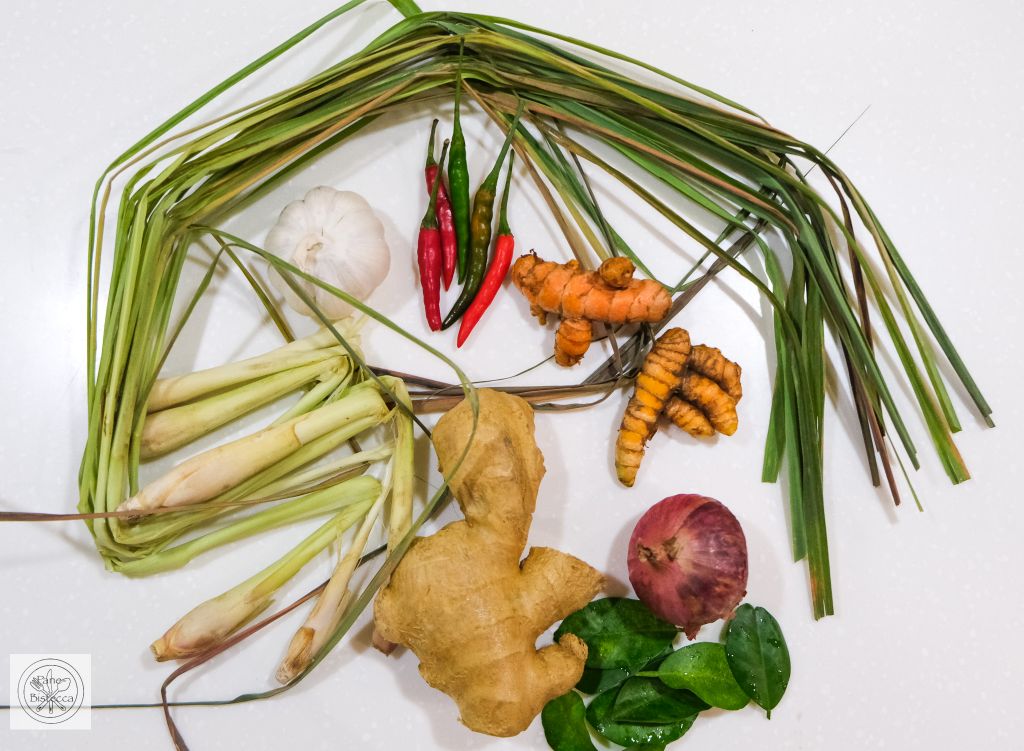
5 cm Ginger
3 Lemongrass
3 cm fresh Turmeric
1 Onion
6 Garlic cloves
2 red Chilis (or more)
50 g Sticky Rice
10 Lime Leaves
1 tsp Salt
½ tsp Sugar
¼ tsp Pepper
1 tbsp Fish Sauce
Pork Intestine, approx. 2.5 meters
Instructions
1
Step 1
Cook the sticky rice according to the package instructions and let it cool.
2
Step 2
Wash the pork intestines thoroughly inside and out with lukewarm water, then place it in a bowl of water.
3
Step 3
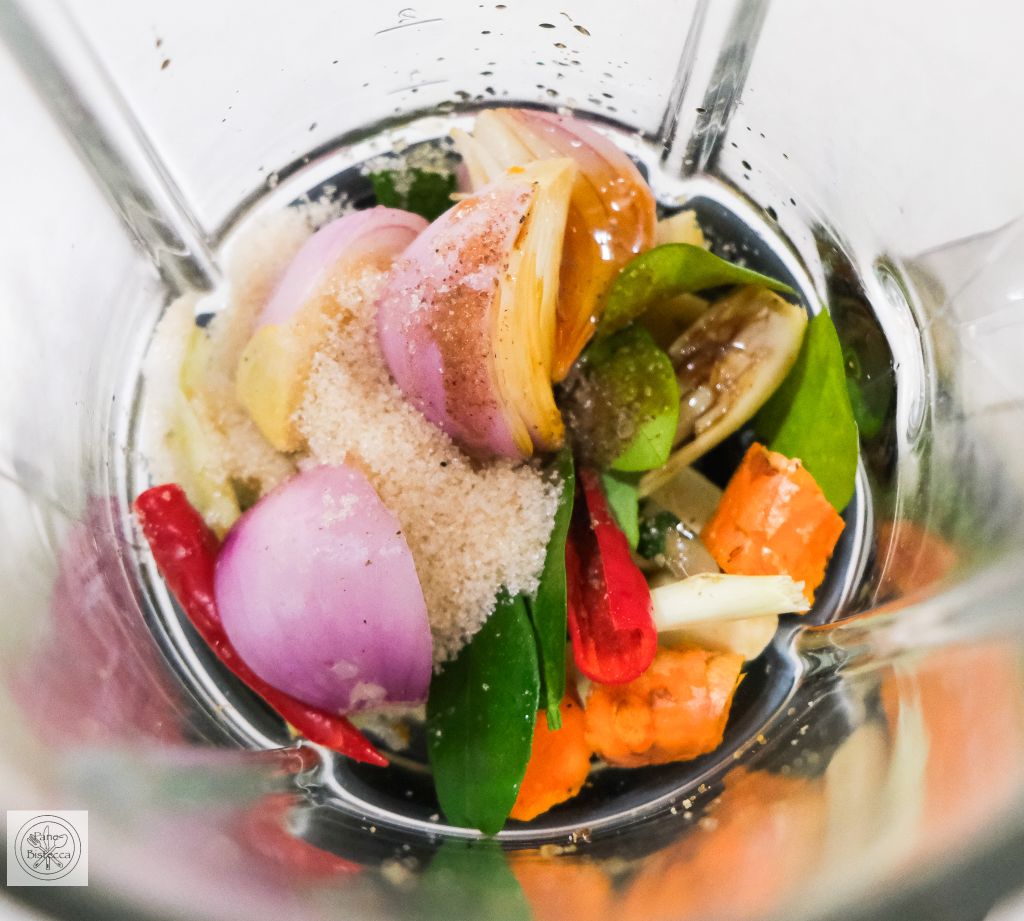
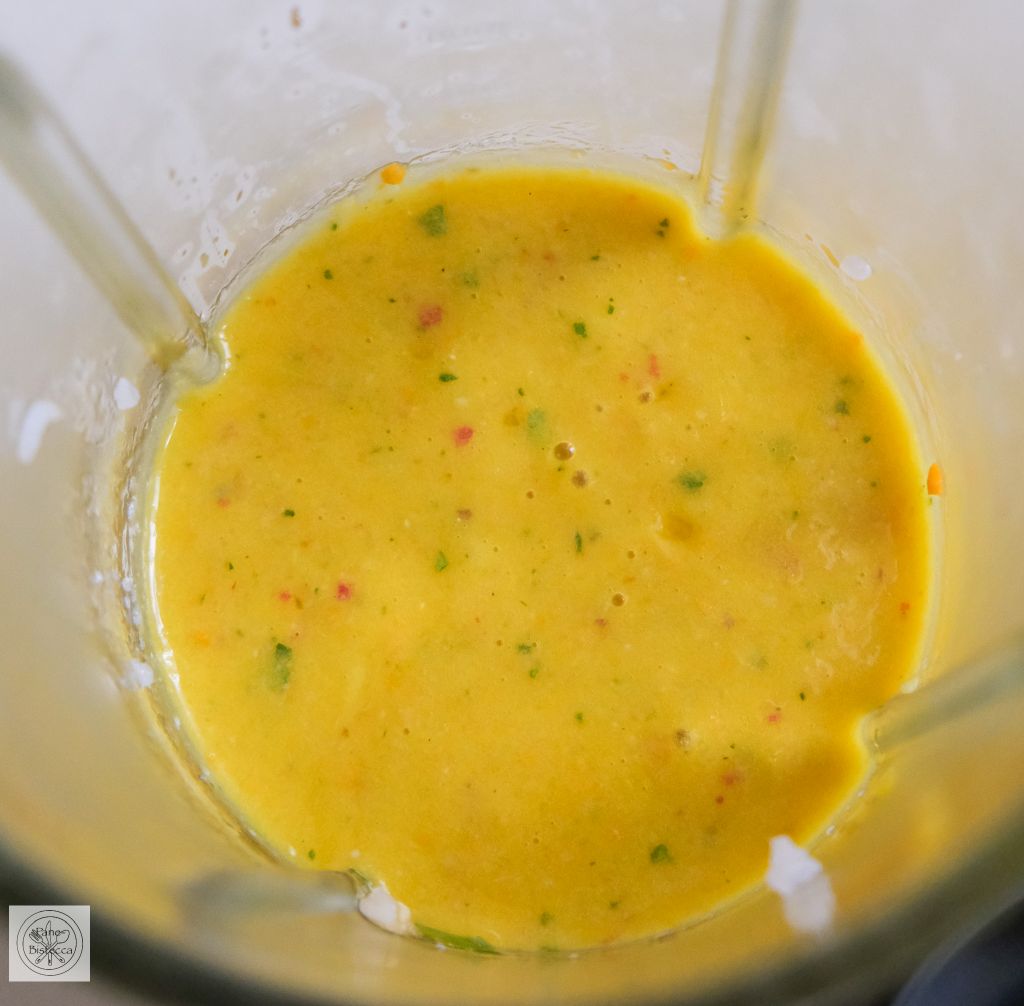
In a blender, briefly blend the coarsely chopped ginger, lemongrass, turmeric, garlic, onion, and chilis, then add the cooked sticky rice, lime leaves, oyster sauce, salt, sugar, pepper, and fish sauce and purée.
4
Step 4
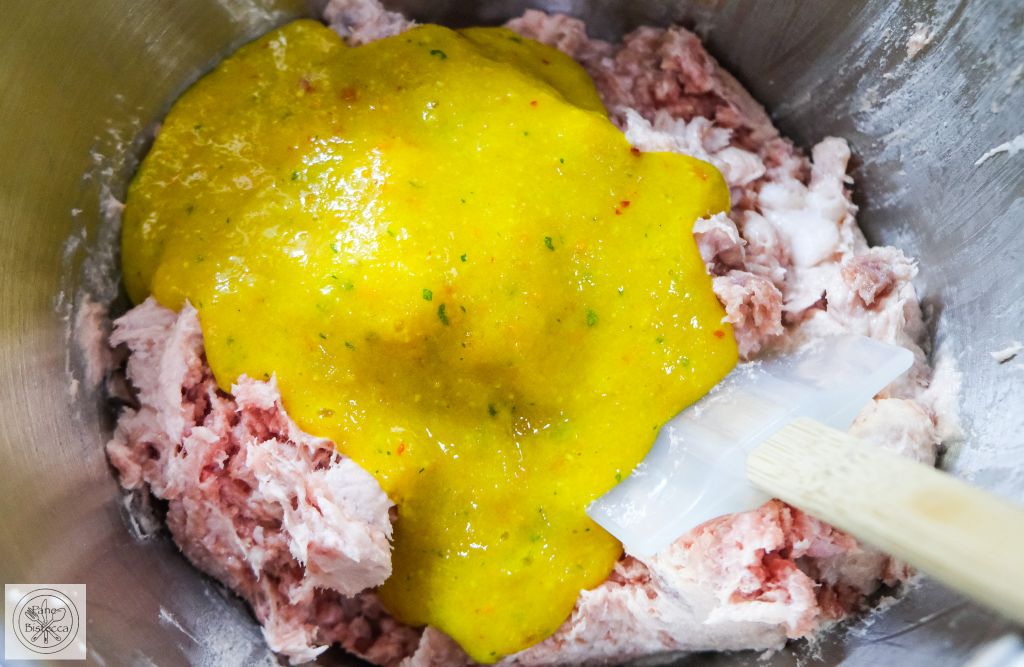
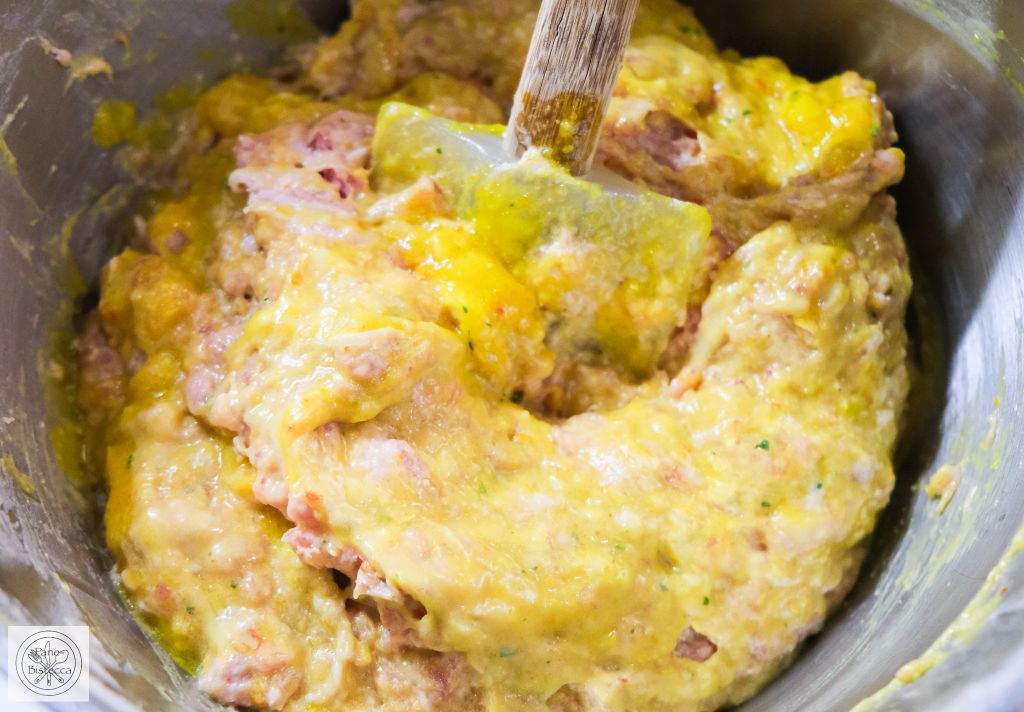
Put the pork through a meat grinder, then mix well with the pureed sauce and knead. The sauce may seem very thin, but the meat will absorb it if you knead it well.
5
Step 5
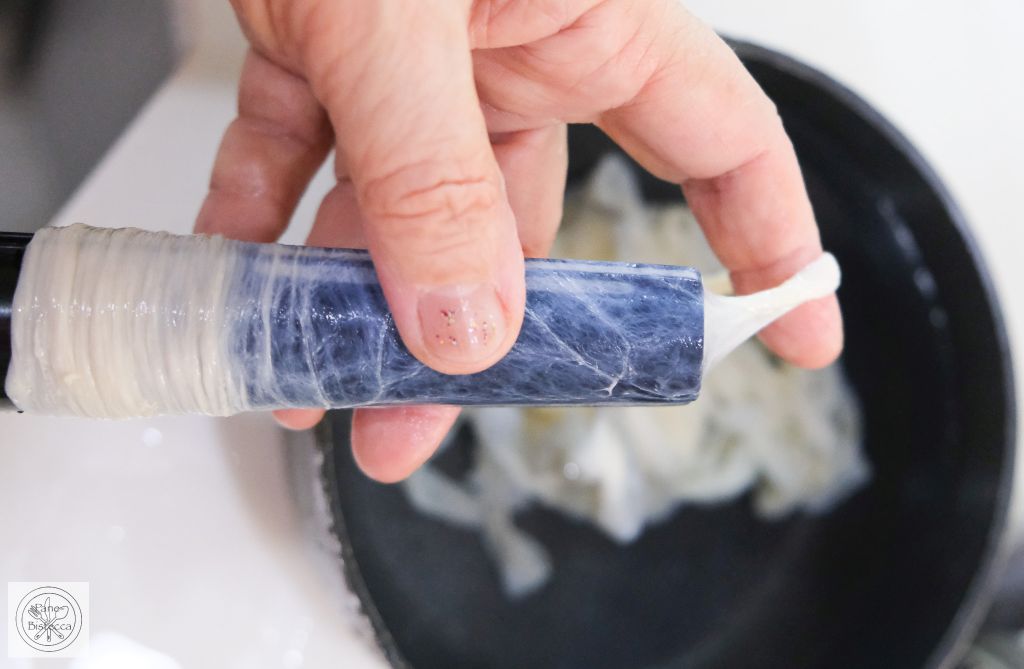
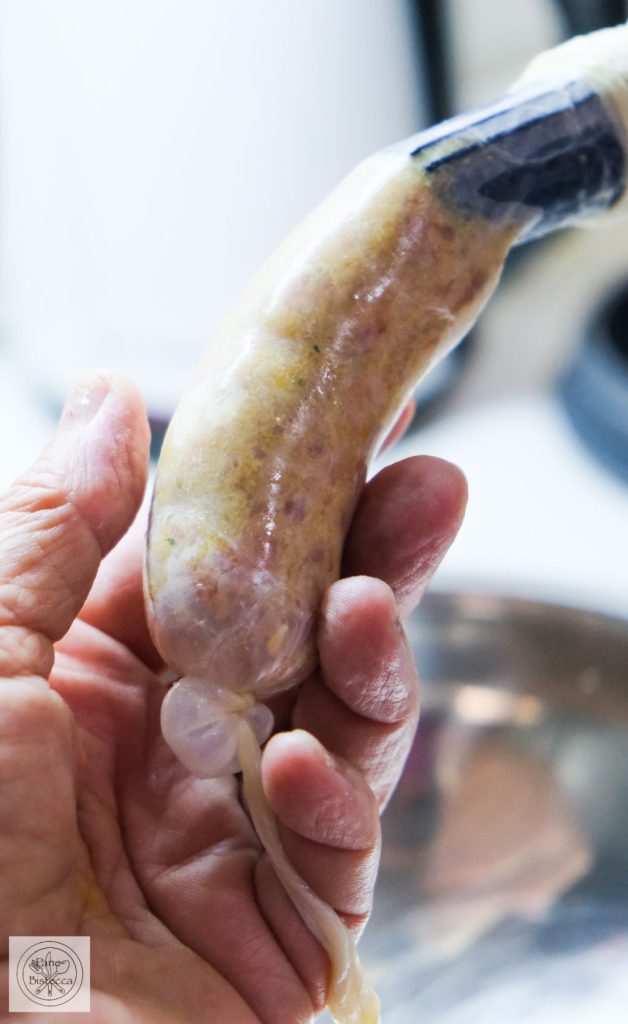
Carefully press the casing onto the tip of the sausage nozzle, tie a knot at the end, and fill with the meat mixture. I made my sausages about 12 cm long.
6
Step 6
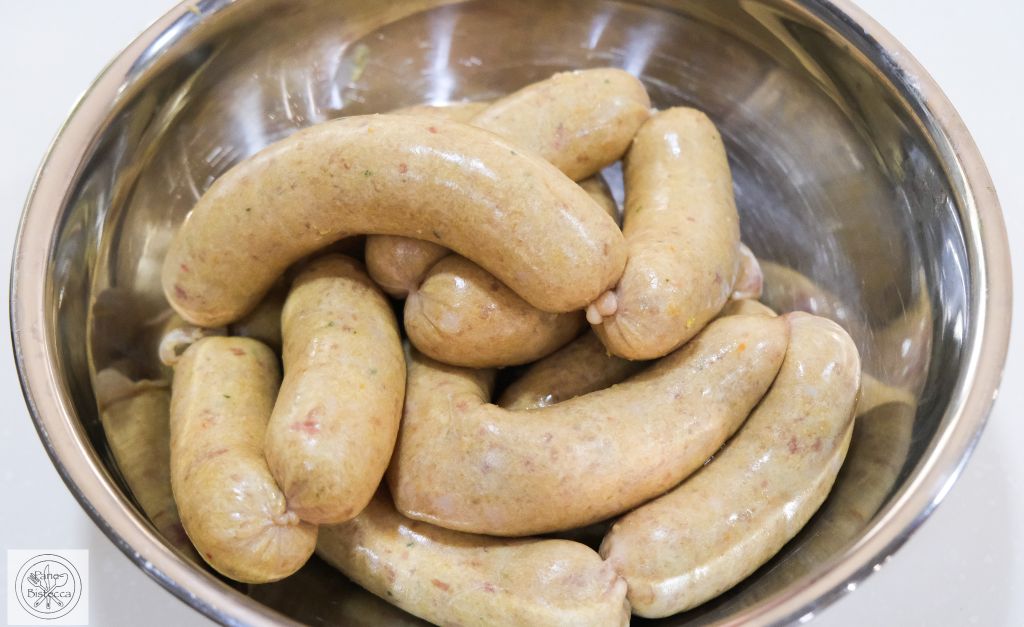
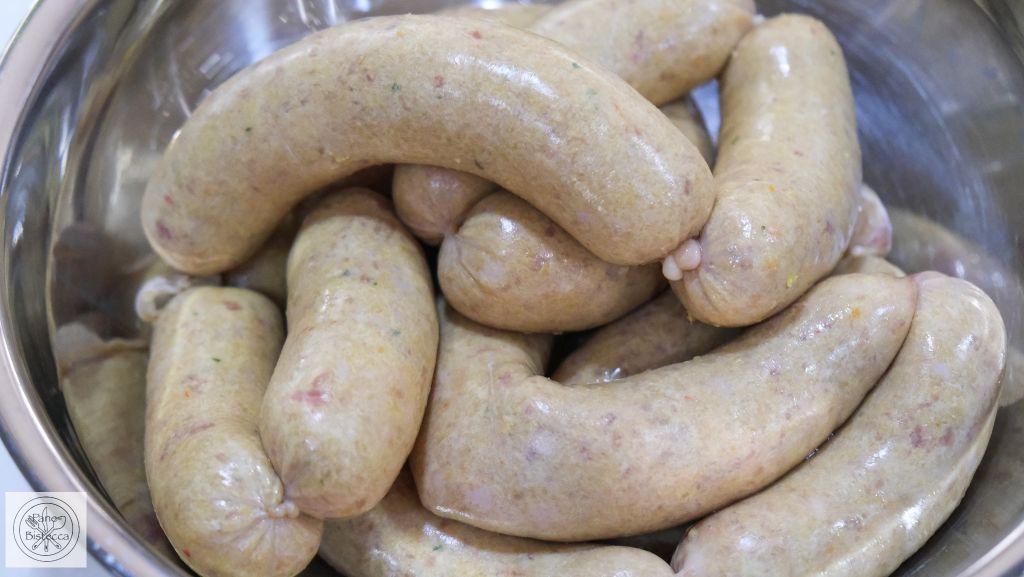
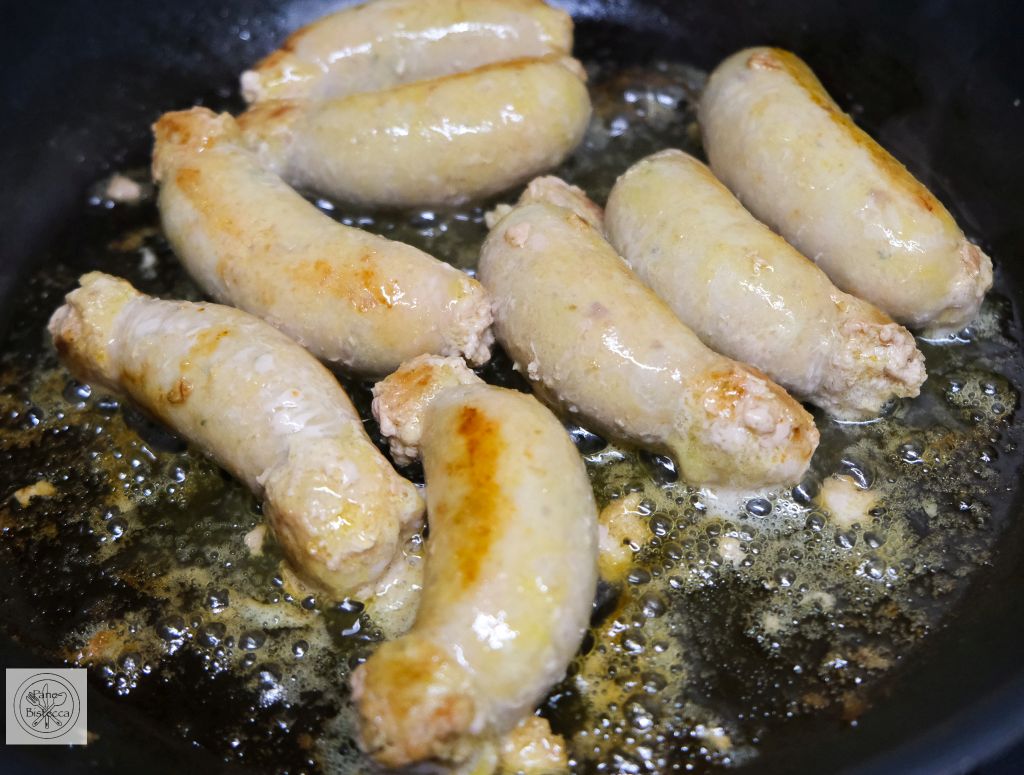
Leave the finished sausages to dry in the refrigerator for 6 hours, then either fry them in the oven or in a pan, or freeze them.
Notes
The sausage isn’t spicy, so feel free to add more chili. Make sure to cook it thoroughly! Here are more Recipes from Laos!

- Wilma von Pane-Bistecca mit Sai Oua – Wurst aus Laos
- Petra aka Cascabel von Chili und Ciabatta mit Geschmorte Soja-Hähnchenschenkel aus Laos – Ob Gai
- Simone von zimtkringel mit Larb Gai – Laotischer Salat mit gehacktem Hühnerfleisch
- Regina von Bistroglobal mit Laotische Nudelsuppe – Khan Poon Nam Gai
- Britta von Brittas Kochbuch mit Kua Mee – Gebratene Nudeln aus Laos



![[Valid RSS]](https://pane-bistecca.com/wp-content/uploads/2024/05/valid-rss-rogers.png "Validate my RSS feed")
Sehr spannend, deine laotischen Würste! Die würde ich gerne probieren 🙂
die schmecken sehr gut!
LG Wilma
Spannend! Die Würste würde ich glatt mal probieren, zumal ich ein Rezept für ein Baguette (Überbleibsel aus der französischen Konolisation) mit genau diesen Würsten gefunden habe.
Leider ist mir vieles, was man leicht selber machen könnte zu aufwendig geworden.
Liebe Grüße
Britta
Also diese Würste sind nicht ganz so schnell gemacht, wenn ich in Deiner Nähe wäre, würde ich dir ein paar senden.
LG Wilma
Die pürierten Zutaten für die Würste begeistern mich, man müsste aus der gesamten Wurstmasse doch auch Bällchen machen können…. (?)
Ganz sicher, das habe ich gemacht, um abzuschmecken, also kein Problem.
LG Wilma
Liebe Wilma, so ein Stückchen von der Wurst ist für mich reserviert. Ich komme. Viele Grüße, Regina
Ich brate sie schon mal auf!
LG Wilma
Liebe Wilma, ich liebe solche Rezepte! Vor allem der Klebreis in der Füllung ist spannend und die vielen Gewürze gefallen mir eh. Grund, demnächst mal wieder den Fleischwolf aus dem Schrank zu holen und mich selbst daran zu versuchen. Vielen Dank für die tolle Anregung!
Grüße aus Schwaben
Simone
Gerne doch! Ich finde die Würste schmecken hervorragend!
Und vom Klebreis merkt man nicht viel, er macht aber, dass die Masse besser zusammenhält.
LG Wilma