Chinese Taro Cakes
Pane-Bistecca
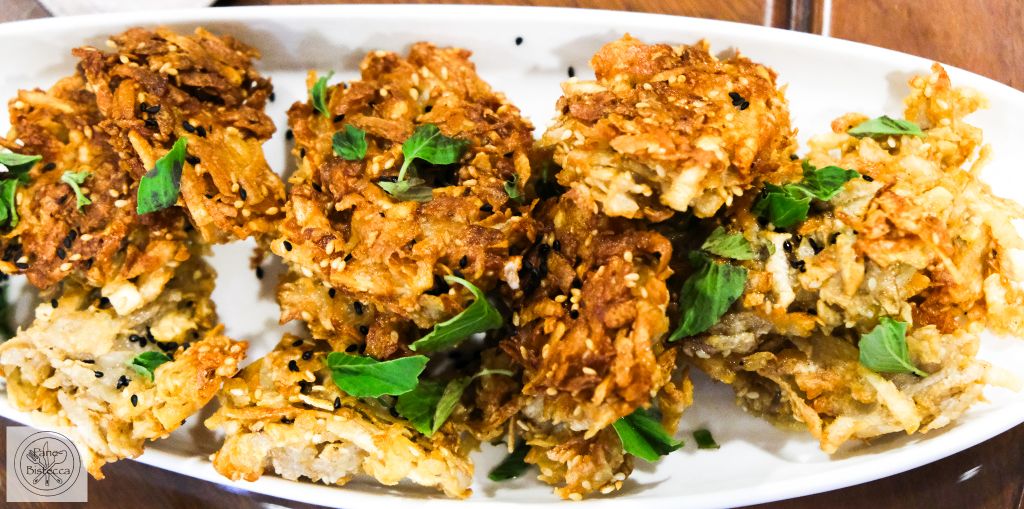
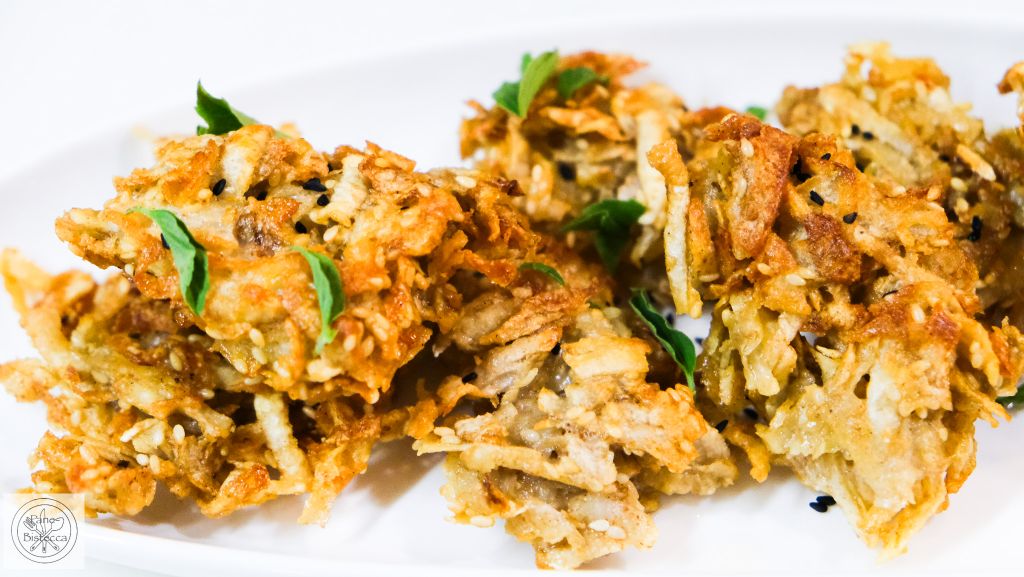
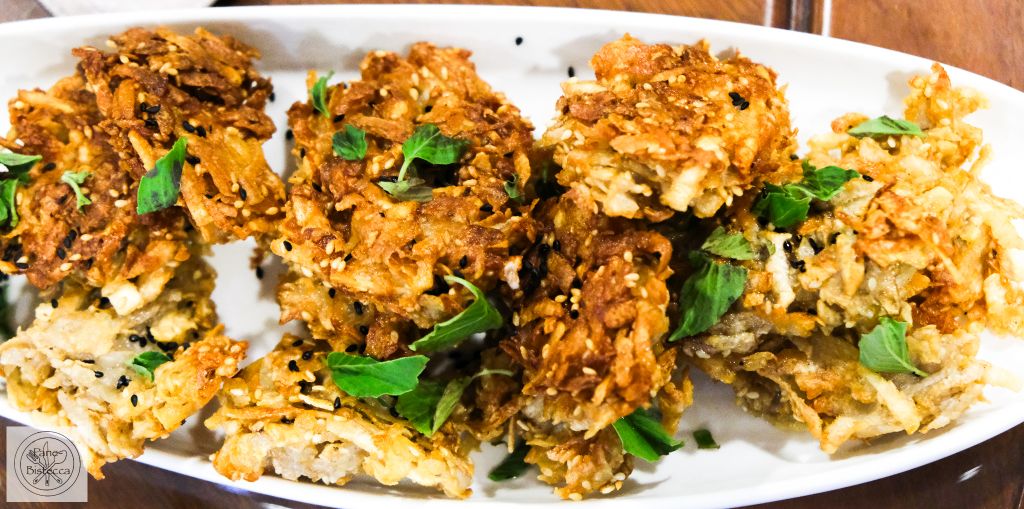
I love taro, and these Chinese taro cakes are very crispy and delicious. They’re very easy to make, and if you can’t find taro, you can also make them with sweet potatoes.
Taro is a plant from the arum family. Its starchy roots are cooked or roasted.
Other names for taro include water bread root, colocasia, taioba, eddo, eddoe, eddro, and dasheen.
Today, taro is found throughout the tropics, though in most locations it was introduced by humans. Research suggests that the original wild taro originated on the Malay Peninsula, though there were also natural occurrences in India, where the species was already being cultivated as early as 5000 BCE. From there, the species spread through human intervention first throughout Southeast Asia, then to China and Japan.
Cultivated taro from Japan and China reached Egypt around 100 BCE, where it was cultivated and spread throughout the Mediterranean region. The starchy rhizomes of the plant are the primary part used. These consist of two-thirds water and about one-third carbohydrates, mostly starch. The protein content amounts to seven percent of the dry matter. In the countries where it is grown, however, almost all other parts of the plant are also eaten; the leaf stalks and leaves in particular are rich in protein (23 percent of the dry matter).
Taro is a plant from the arum family. Its starchy roots are cooked or roasted.
Other names for taro include water bread root, colocasia, taioba, eddo, eddoe, eddro, and dasheen.
Today, taro is found throughout the tropics, though in most locations it was introduced by humans. Research suggests that the original wild taro originated on the Malay Peninsula, though there were also natural occurrences in India, where the species was already being cultivated as early as 5000 BCE. From there, the species spread through human intervention first throughout Southeast Asia, then to China and Japan.
Cultivated taro from Japan and China reached Egypt around 100 BCE, where it was cultivated and spread throughout the Mediterranean region. The starchy rhizomes of the plant are the primary part used. These consist of two-thirds water and about one-third carbohydrates, mostly starch. The protein content amounts to seven percent of the dry matter. In the countries where it is grown, however, almost all other parts of the plant are also eaten; the leaf stalks and leaves in particular are rich in protein (23 percent of the dry matter).
Ingredients
500 g Taro, coarsely grated
1 tsp Chinese 5-Spice Powder
30 g Sesame Seeds
40 g Rice Flour
3-5 tbsp cold Water
Black Sesame
Thai Basil
Instructions
1
Step 1
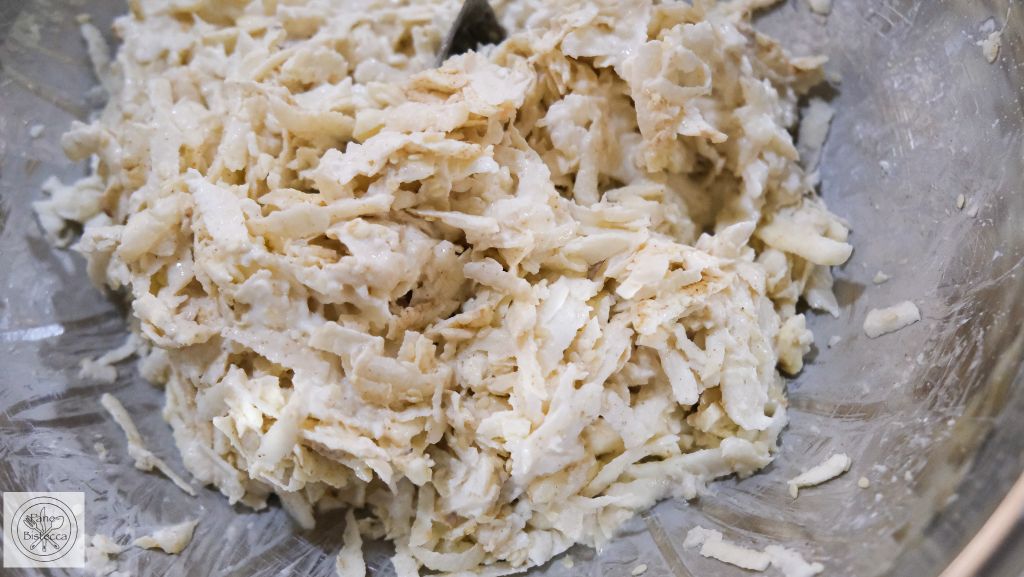
Place the grated taro in a bowl and mix with the spice and sesame.
2
Step 2
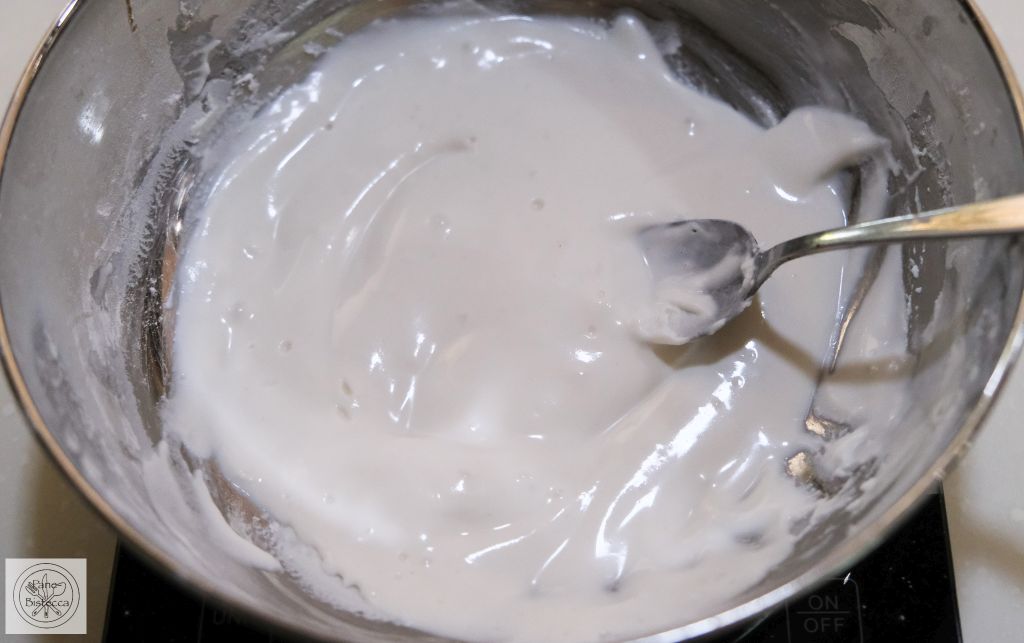
In a second bowl, mix the flour with the water until a batter forms that is not too thin. Knead this into the taro mixture.
3
Step 3
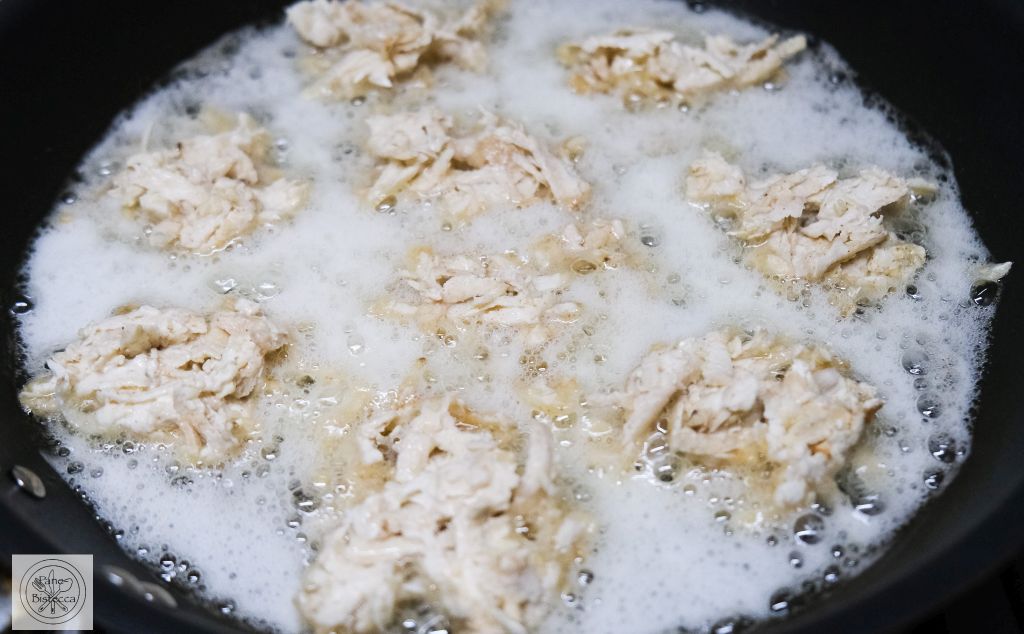
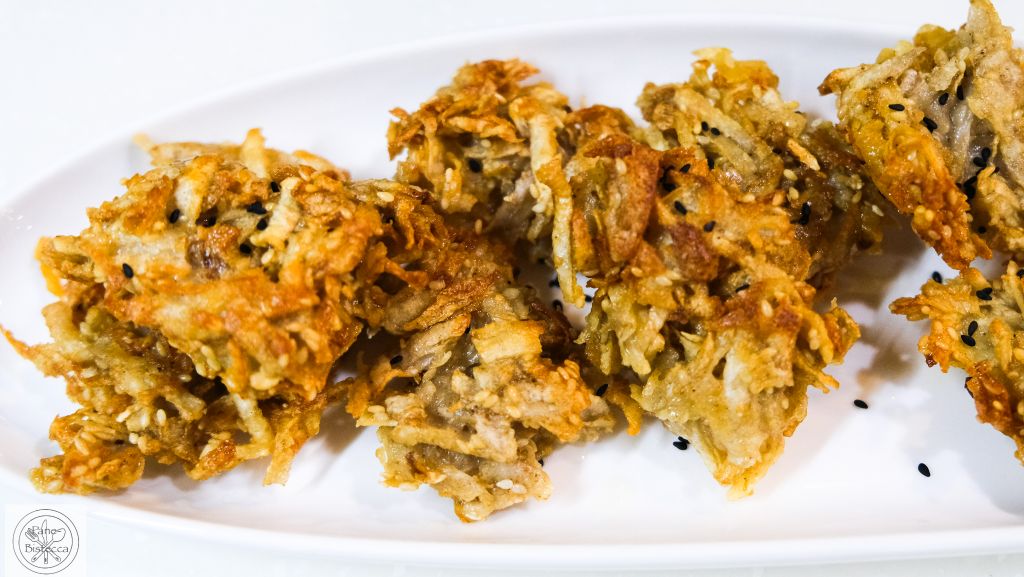
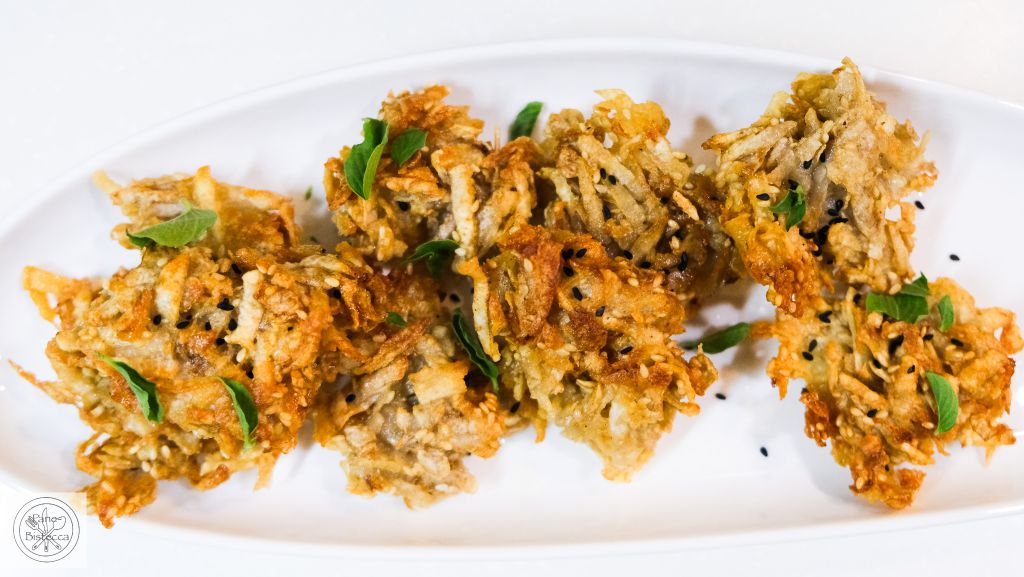
Heat oil to a depth of about 2 cm in a shallow pan and fry tablespoon-sized mounds of the mixture. Let the cakes drain briefly on paper towels, then sprinkle with black sesame seeds and Thai basil and serve.
Notes
They turn out incredibly crispy! More Chinese Recipes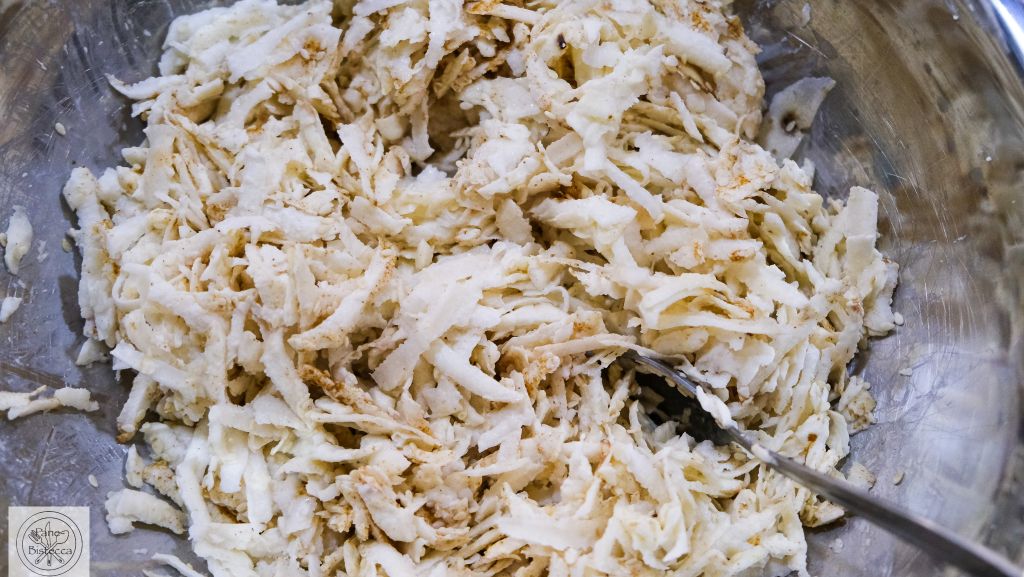



![[Valid RSS]](https://pane-bistecca.com/wp-content/uploads/2024/05/valid-rss-rogers.png "Validate my RSS feed")